
The challenge
Our client is one of the largest education publishers in the world, with more than 6,000 people. For generations, its content has sat at the heart of classrooms: textbooks, teacher guides and learning resources trusted by schools across the globe.
Generative AI is changing that world quickly. Teachers can now ask a chatbot for a lesson plan in seconds. Students can get explanations on demand. For a publisher, this is a classic Kodak moment. The organisations that see the shift early and respond can lead the next era of education. Those that don't risk watching their content become a commodity that other people's tools consume.
The publisher saw it early. The question was what to do about it. A large organisation can't bet on vague AI ambitions. It needs a clear view of where a new product can create real value, who it serves, what it would take to build and how it fits the business.
Teachers were the obvious place to look. They spend a large share of their time adapting content: turning textbook material into lesson decks, worksheets and guides for their own classes. That is skilled work, and much of it is repetitive. The publisher holds an enormous library of high-quality content. The opportunity was to connect the two.
Our approach
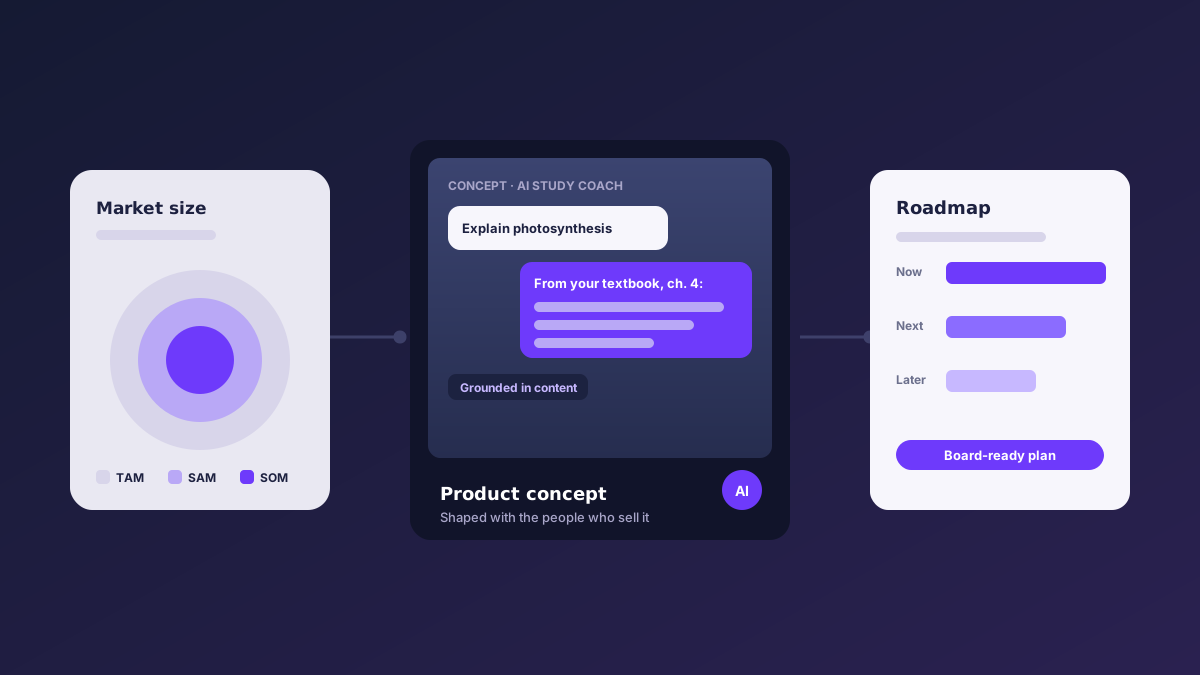
Size the market opportunity
We ran a commercial sprint to map the opportunity for an AI product built on the publisher's content, including who would use it, what problem it solves and where the value sits for the business.
Shape the product
We defined a product that helps teachers multiply their productivity using the publisher's materials. It indexes the publisher's content with large language models so teachers can turn it into lesson decks, teacher guides and other resources in a fraction of the time.
Plan the road ahead
We set out a roadmap that starts with teachers and grows toward a student experience, where the same framework personalises learning for each student. A physics lesson could be taught through soccer for a student who loves the game.
The results
The publisher now has a validated product direction for AI in its core market, grounded in real teacher workflows and the content it already owns. Instead of competing with general-purpose AI tools on their terms, the concept puts the publisher's trusted materials at the centre, which is exactly what teachers and schools value.
The sprint turned a broad strategic question into a specific, buildable product with a clear first user and a clear path to growth. The technical approach, using Supabase, a vector database and large language models to index and repurpose content, gives the publisher a realistic view of what it would take to build. The build phase is now in discussion.
The longer-term vision matters too. Personalised learning, where every student gets content framed around what interests them, is where education is heading. The publisher has a roadmap that takes it there from a practical starting point.
For Lightning Ventures, the publisher is our largest client by headcount and a clear sign of where our work is heading: helping large organisations respond to AI with products, not just strategy.
What this means for your business
If your organisation owns valuable content, data or expertise, AI is either your biggest opportunity or your biggest threat, and the difference is how early you act. The organisations that move first can define how AI is used in their market.
We run focused commercial sprints that size the opportunity, shape the product and lay out the build, so leadership can decide with confidence. Then we can build it. If your industry is facing its Kodak moment, let's talk before someone else defines it for you.


