
AI and Custom Software for Manufacturers
Lightning Ventures helps manufacturers deploy AI and custom software that schedules production, keeps quality and compliance records audit-ready, automates purchasing, and connects the shop floor to the back office. We build systems that lift throughput and cut waste without a rip-and-replace.
By the numbers
80+
Apps shipped across Australia
2–6
Weeks to production
100%
Australian-based team
ERP/MES
Integrates with your stack
Trusted by leading organisations




How we help manufacturing businesses
AI Scheduling & Predictive Maintenance
AI-assisted scheduling that sequences jobs against capacity, materials, and due dates, plus predictive maintenance that reads machine telemetry to fix before a line stops -- so planners stop juggling whiteboards and downtime stops being a surprise.
Custom MES & Production Platforms
Bespoke shop-floor software we design and build -- MES-style production platforms, job-tracking screens, and live capacity dashboards -- shipped in sprints and built to how your floor actually runs, not squeezed into an off-the-shelf platform.
Custom Quality, Traceability & Inventory Systems
Purpose-built systems for digital quality records, batch/lot traceability, and BOM-driven inventory and WIP -- audit-ready to ISO 9001 / AS9100 and built around your process, so a recall is a query and materials arrive just in time.
ERP/MES Integration & Custom Dashboards
Custom integration layers and reporting that connect your ERP, MES, and shop-floor equipment -- with the dashboards and extensions you're missing built in, so shop floor and back office share one current view instead of rekeying between islands.
Where manufacturing operations lose time and money
The schedule lives on a whiteboard
Production is planned on a whiteboard or a spreadsheet that's out of date the moment a machine goes down or a material shipment slips. Planners spend their day re-juggling instead of improving throughput, and the floor works off stale information.
Quality records are paper — and audits are dread
Inspection sheets, non-conformances, and certificates of conformance sit in folders and clipboards. When a customer complains or an ISO auditor arrives, tracing a batch's history is a manual dig through paper that takes days you don't have.
Purchasing and stock run on guesswork
Reorders happen when someone notices a bin is empty. You either stock out and stop a line, or over-order and tie up cash in a warehouse — because BOMs, stock, and supplier lead times aren't connected.
The shop floor and the back office don't talk
Job data lives on the floor, financials in the ERP, and staff rekey between them. Nobody has a single, current view of what a job actually cost or whether it shipped on time.
What changes when you work with us
Before — the manual way
- Production scheduled on a whiteboard or spreadsheet
- Quality checks recorded on paper job cards
- Batch traceability means digging through folders
- Purchase orders raised manually, ad hoc
- Stock and WIP counted by walking the floor
- Maintenance is run-to-failure and reactive
- Shop-floor data rekeyed into the ERP by hand
After — with Lightning Ventures
- Jobs sequenced against capacity, materials and due dates
- Quality captured digitally at the point of work
- Full batch/lot traceability in a single search
- POs auto-drafted from BOMs and reorder rules
- Live stock and WIP visibility across the floor
- Maintenance scheduled from machine telemetry
- Shop floor and ERP integrated — data flows once
From first call to working software
Scoping call
A free call where we walk your operation — often literally your floor — and find the single most expensive manual bottleneck. If software won't help, we tell you.
Scoped proposal
A clear plan for the first two-week sprint — defined deliverable, defined price (around $10k) — targeting that highest-return process first.
Build in sprints
Working software every two weeks. You review real, running software against real jobs and steer the next sprint from there.
Launch and hand over
It ships on infrastructure you own, integrated with your ERP and equipment, with monitoring — never a black box only we can open.
What you need to know
The straight version on what to build, what to buy, and what it costs — no jargon.
Not sure where to start?
Book a free scoping call and we'll tell you honestly what's worth building.
Book a free callMost of what a manufacturer needs from software comes down to a few questions: what does Lightning Ventures build for a shop floor, where does it pay off first, what does it cost, and can it fit your operation and integrate with what you already run. Here are straight answers.
AI and custom software for manufacturing — two halves of one story
We build two complementary things for manufacturers: AI and automation that clears the manual coordination between your schedule, floor, quality records, and supply chain, and custom software — the bespoke MES, production platforms, and shop-floor systems that off-the-shelf ERP and generic MES don’t cover. Most manufacturers need some of both, and we do them together instead of leaving you to bolt one vendor’s automation tool onto another’s platform.
On the automation side, we replace manual coordination with connected, rules-driven and AI-assisted workflows. Instead of a planner re-juggling a whiteboard, a QA lead chasing paper, and a buyer reordering by eye, the software sequences jobs against real capacity and materials, captures quality at the point of work, drafts purchase orders from the bill of materials, and predicts maintenance from machine telemetry — with people stepping in on exceptions rather than driving every step. That spans:
- Production scheduling — sequencing jobs against capacity, materials, and due dates so the floor always knows what runs next.
- Quality and compliance — digital inspection records, non-conformance tracking, and batch traceability that keep ISO 9001 / AS9100 audits painless.
- Inventory and procurement — BOM-driven stock control and automated supplier POs so materials arrive just in time.
- Predictive maintenance and document processing — machine telemetry turned into scheduled fixes, and paper job cards and dockets turned into structured data.
On the custom software side, we build the systems themselves — MES-style production platforms, quality and traceability systems, custom dashboards, inventory/BOM tools, and ERP extensions built to how your floor actually runs. Where automation removes manual steps from a process you already run, custom software gives you the platform that doesn’t exist yet off the shelf: a production system fitted to your process, a traceability database structured to your batches, a dashboard that shows the one number your operation lives on. The next two sections take each half in turn.
Off-the-shelf vs custom manufacturing software: the honest trade-off
Most manufacturers hit a point where generic ERP modules and off-the-shelf MES stop fitting how they actually make things. Here’s the trade-off at a glance:
| Off-the-shelf ERP/MES | Custom manufacturing software | |
|---|---|---|
| Best for | Standard processes you can adapt to | When your process is your edge |
| Upfront cost | Low licence, high configuration | Higher, but scoped in sprints |
| Time to start | Slow to configure and roll out | 2–6 weeks to first production build |
| Fit to your process | You adapt the floor to the tool | The tool fits how the floor runs |
| Scales with you | Until you hit module limits | Grows with the business |
We’re usually brought in when a growing manufacturer has outgrown spreadsheets and paper but finds full MES platforms overpriced and overbuilt — or has an ERP that handles finance well but nothing for the floor. The right answer is often a lean custom layer that automates the painful parts and integrates the systems you already rely on, not a full rip-and-replace.
Custom manufacturing software is the other half of what we build
A lot of our manufacturing work sits here: bespoke shop-floor software built to your process, not squeezed into a generic tool. Where the automation above removes manual steps, custom software gives you the platform that doesn’t exist off the shelf. Typical builds include:
- MES-style production platforms — job tracking, work-order routing, capacity planning, and shop-floor terminals built around how your floor actually runs, not a template you bend your process to fit.
- Quality and traceability systems — purpose-built quality-record, non-conformance, and batch/lot traceability databases structured to your products and your ISO 9001 / AS9100 obligations, so batch history is one query.
- Inventory, BOM and WIP systems — custom bill-of-materials, stock, and work-in-progress tools that model your parts and assemblies exactly, with reorder rules and supplier logic wired to how you buy.
- Custom dashboards and reporting — live OEE, throughput, scrap, and on-time-delivery dashboards that surface the numbers your operation actually runs on, pulled from the floor and the ERP in one view.
- ERP extensions and integrations — the custom modules, data flows, and connections to SAP, MYOB, NetSuite, Odoo, MES, and SCADA that make the systems you already run do what they can’t out of the box.
These are the same capabilities we’ve built across other sectors: analytics, integration, and AI on top of messy real-world systems. The next section covers what a build like this costs and how fast it ships.
What custom manufacturing software costs — and how fast it ships
You don’t need an enterprise budget. Because we work in two-week sprints with a defined deliverable and an agreed price of around $10k per sprint, you start with one high-return piece, prove the value, then expand — never committing to a six-figure platform on day one.
| Scope | What’s included | Typical timeline |
|---|---|---|
| Focused automation | One workflow — e.g. digital quality records, automated PO generation, or a shop-floor job-tracking screen | 1–2 sprints (2–4 weeks) |
| Multi-workflow system | Scheduling + quality + inventory wired together and into your ERP | 3–5 sprints (6–10 weeks) |
| Full custom platform | End-to-end build integrating ERP, MES, and shop-floor equipment | Multiple sprints, scoped in stages |
The cheapest manufacturing software is the piece that pays for itself first. We deliberately start with the one process bleeding the most time or scrap — so the first sprint funds the next.
Predictive maintenance and shop-floor document processing
Two capabilities consistently earn their keep. Predictive maintenance turns machine telemetry — vibration, temperature, power draw, cycle counts — into maintenance scheduled days ahead of a failure, so you fix during planned downtime instead of scrambling when a line stops. And shop-floor document processing uses AI to turn the paper that clogs manufacturing — job cards, delivery dockets, certificates of conformance, supplier invoices — into structured data that flows straight into your systems, no rekeying.
| Capability | What it replaces | Typical result |
|---|---|---|
| Predictive maintenance | Run-to-failure and fixed-interval servicing | Less unplanned downtime, longer asset life |
| AI document processing | Manual data entry from paper and PDFs | Faster throughput, fewer entry errors |
| Batch traceability | Digging through folders for batch history | Recalls and audits handled in minutes |
Manufacturing software for workshops through to multi-site
Whether you’re a single-site workshop or a multi-facility manufacturer, we build software sized to your operation — the specific automation that removes your worst bottleneck, not a bloated all-in-one. Smaller manufacturers start with one high-return piece (say, digital quality records that end the audit dread, or a schedule that accounts for material availability) and expand as it pays for itself. Larger manufacturers get systems built for scale, multi-site data, and integration across many machines and ERPs. Because each two-week sprint has a defined price, the entry point is the same regardless of size — start where the return is highest, then grow.
Honest proof — even without a manufacturing case study
We’ll be straight with you: we haven’t yet published a manufacturing-specific case study. What we can show is a track record of building the exact capabilities manufacturing needs — analytics, integration, and AI on top of messy real-world systems. We rebuilt product management and analytics for IAG, delivering a 5x improvement in the metrics that mattered. We cut manual reporting effort by 50% for a global sustainability NGO, and lifted throughput 20% for an AI survey technology business. Different industries, same discipline: find the costly manual process, automate it, and integrate rather than replace.
Custom manufacturing software, built for Australian manufacturers
We’re a Melbourne-based team working with manufacturers nationally — fabricators, food and beverage producers, industrial and precision manufacturers in Sydney, Brisbane, Adelaide, Perth, and regional hubs. We handle manufacturing software development for Sydney and Brisbane operators as readily as Melbourne ones: delivery is remote-first, with on-site workshops on the floor where they help, and every system runs on infrastructure you own and control.
Explore our approach to AI integration and custom software, or see how we scope and ship in sprints.
Real systems, real numbers

.png)
Frequently asked questions
How does AI improve manufacturing efficiency?
AI analyses data from your production lines, equipment sensors, and order book to sequence jobs, predict equipment failures, and flag quality drift before it becomes scrap. In practice the biggest early wins are usually unglamorous: automating the production schedule so it accounts for material availability and due dates, and digitising quality records so nothing is rekeyed. Those alone typically lift throughput and cut waste within the first few months.
What manufacturing processes can be automated with custom software?
Common high-return targets include production scheduling and job sequencing, quality inspection records and non-conformance reporting, BOM and inventory management, purchase order creation and supplier follow-up, maintenance scheduling from machine telemetry, and shop-floor document processing — turning paper job cards, dockets, and certificates of conformance into structured data. Automating these removes manual handling, rekeying, and the errors that cost real money.
Can you integrate with our existing ERP or MES?
Yes. We build integration layers that connect ERP platforms (SAP, MYOB, NetSuite, Odoo), MES and SCADA systems, and shop-floor equipment so data flows once instead of being rekeyed. Our solutions enhance your existing systems rather than replacing them — we add the scheduling, quality, or automation layer you're missing and wire it into what you already run.
How does software help with ISO and audit compliance?
Compliance suffers when records live on paper and in people's heads. We build systems that capture quality checks, inspection results, non-conformances, corrective actions, and batch/lot traceability at the point of work, time-stamped and linked to the job. When an auditor or customer asks for the history of a batch, it's a search rather than a filing-cabinet dig — which makes ISO 9001, AS9100, and HACCP audits far less painful.
What does custom manufacturing software cost and how fast does it ship?
We work in two-week sprints with a defined deliverable and an agreed price — roughly $10k per sprint — so you start with one high-return piece and expand as it proves out. A focused build (say, a digital quality-record system or an automated PO workflow) is often one to two sprints; a scheduling system wired into your ERP is a few sprints; a full MES-style platform is scoped in stages. You never commit to a six-figure platform on day one.
What size manufacturers do you work with?
From single-site workshops through to multi-facility mid-market manufacturers across Australia. Smaller operations start with the one process costing them the most — usually scheduling or quality paperwork — and grow from there. Larger manufacturers get systems built for scale, multi-site data, and integration across many machines and ERPs. Because each sprint is priced the same way, the entry point is the same regardless of size.
Do you build manufacturing software for businesses in Sydney and Brisbane?
Yes. We're Melbourne-based but work with manufacturers across Australia — Sydney, Brisbane, Adelaide, Perth, and regional industrial hubs included. Delivery is remote-first with on-site workshops on the floor where they add value, and every system runs on infrastructure you own.
How do you handle data security and operational technology?
We treat OT environments carefully. Solutions use secure API connections, role-based access, and encrypted transfers, and we can deploy on-premises or in a private cloud where the shop floor requires it. We work within your existing security frameworks rather than forcing production-critical systems onto infrastructure you don't control.
Related services
AI Integration
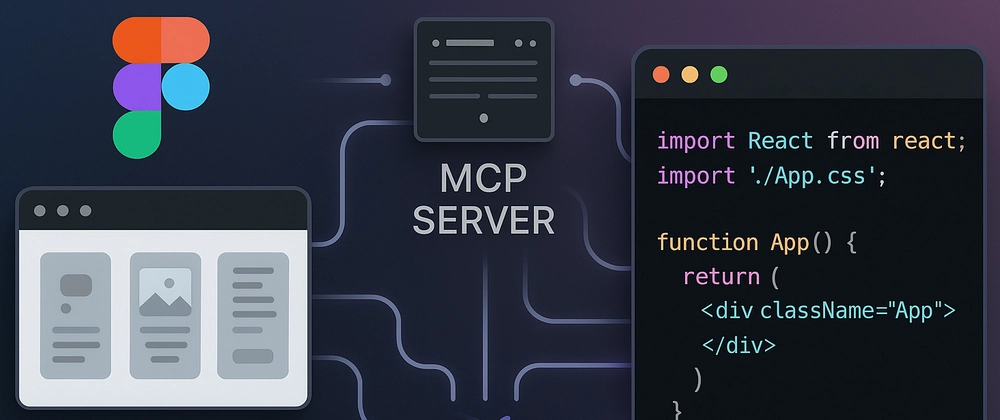
We build AI integrations, LLM agents, MCP servers, and workflow automation that replaces manual work and compounds over time.
Custom Software
We scope tight, build in sprints, and ship working software in weeks. No 200-page requirements docs or offshore handoffs.
Digital Transformation
Replace slow manual processes with fast automated ones. Process mapping, tool integration, and AI automation.
Industries we work across
The same AI and custom software patterns transfer across sectors. See how we help teams in related industries.
Ready to get started?
Book a free 30-minute scoping call. We'll tell you honestly whether we can help.