
AI and Custom Software for Telecommunications Companies
Lightning Ventures helps telcos, ISPs, MVNOs, and carriers deploy AI and custom software that triages support enquiries, automates provisioning and order workflows, speeds network fault resolution, and cuts churn. We build systems that handle the scale and complexity of modern telco operations without a rip-and-replace of your OSS/BSS stack.
By the numbers
80+
Apps shipped across Australia
2–6
Weeks to production
100%
Australian-based team
OSS/BSS
Integrates with your stack
Trusted by leading organisations





How we help telecommunications businesses
Enquiry Triage and Network Fault Automation
AI agents that resolve tier-one enquiries — billing questions, plan changes, connectivity troubleshooting — and alarm correlation that suppresses NOC noise, surfacing the genuine incidents worth acting on. Automation across the seams your teams work by hand.
Self-Service and Reseller Portals
Bespoke customer self-service and reseller/partner platforms we design and build — usage, plan changes, billing, provisioning, reporting, and white-label capability — wired into your billing and CRM so the data is real-time, not a disconnected copy.
Custom OSS/BSS Tooling and Provisioning Systems
Provisioning and order-orchestration systems, customer apps, and custom OSS/BSS modules built to how you actually operate — the tooling that takes an order from validation through activation, port-in, and disconnection without the manual handoffs.
Custom Dashboards and Integration Layers
Bespoke churn-analytics dashboards and the lean integration layers that connect billing, provisioning, network management, CRM, and carrier APIs — the custom software that makes your existing stack behave like one system.
Where telecommunications operations lose time and money
Support queues absorb enquiries that should never reach an agent
Balance checks, plan changes, and 'is my service down?' questions flood the queue. Every one ties up an agent, drives up cost per contact, and pushes wait times up for the customers who genuinely need help.
Provisioning depends on manual handoffs between teams
An order moves from sales to provisioning to the network team by email and spreadsheet. Each handoff is a delay and a chance to rekey something wrong — and the customer feels every day of it before activation.
Your NOC drowns in alarms it can't triage
One fault throws hundreds of alarms across systems. Without correlation, the real incident hides in the noise, alert fatigue sets in, and mean time to resolution climbs while customers are already offline.
You spot churn only after the customer has ported out
Usage, billing, and support signals sit in separate systems, so the account at risk looks fine right up until the port request lands. By then the retention conversation is already lost.
What you need to know
The straight version on what to build, what to buy, and what it costs — no jargon.
Not sure where to start?
Book a free scoping call and we'll tell you honestly what's worth building.
Book a free callMost of what a telco needs from software comes down to a handful of questions: what does Lightning Ventures build for an ISP, MVNO, or carrier, do you buy it or build it, what does it cost, and will it work with the OSS/BSS stack you already run. Here are straight answers.
AI and custom software for telcos — two halves of one story
We build two complementary things for telecommunications operators: AI automation that clears the manual coordination between your support, provisioning, network, and billing teams, and custom software — the portals, provisioning systems, OSS/BSS tooling, and customer apps that off-the-shelf platforms don’t cover. Most operators need some of both, and we do them together instead of leaving you to bolt one vendor’s automation tool onto another’s platform.
On the automation side, we replace the manual coordination with connected, rules-driven and AI-assisted workflows. Instead of an agent answering the same balance question for the hundredth time, a provisioning coordinator emailing the network team, and a NOC operator scrolling through thousands of alarms, the software triages the enquiry, correlates the alarms, and flags the at-risk account — with humans stepping in only where judgement is genuinely needed. That spans three layers:
- Customer operations — enquiry triage and deflection, and churn scoring that feeds retention workflows.
- Service operations — order orchestration, plan changes, and disconnections, coordinated across systems.
- Network operations — fault and incident triage, alarm correlation, and proactive alerting.
On the custom software side, we build the systems themselves — customer self-service and reseller portals, provisioning and order-orchestration platforms, custom OSS/BSS modules, integration layers, and the analytics dashboards your NOC and commercial teams actually need. Where automation removes manual steps from a process you already run, custom software gives you what doesn’t exist yet: a portal your customers log in to, a provisioning system built to your service catalogue, a reseller platform you can white-label. The next two sections take each half in turn.
Off-the-shelf platforms vs custom telco software: the honest trade-off
Telco platforms are powerful but rigid, and the gaps between them are where your team burns hours. Here’s the trade-off at a glance:
| Off-the-shelf OSS/BSS | Custom telco software | |
|---|---|---|
| Best for | Standard processes you can adapt to | The workflows that are unique to how you operate |
| Upfront cost | High licensing, long rollout | Lower, scoped in sprints |
| Time to start | Slow — months of configuration | 2–6 weeks to first production build |
| Fit to your process | You adapt to the platform | The software fits how you actually run |
| The gaps between systems | Left for staff to bridge manually | Automated with a lean integration layer |
We’re usually brought in when the core platforms are fine but the seams between them — support to provisioning, provisioning to network, billing to CRM — are eating time and creating errors. The right answer is almost always a lean custom layer that automates those seams and connects what you already run, not another platform migration.
Custom telco software is the other half of what we build
A lot of our telco work sits here: bespoke systems for operators, wired into the OSS/BSS you already run. Typical builds include:
- Customer self-service portals — view usage, change plans, pay bills, troubleshoot, and order services, wired into billing and provisioning so the data is real-time rather than a disconnected copy.
- Reseller and partner platforms — white-label portals with provisioning, ordering, and reporting for the resellers and wholesale partners who sell your service.
- Provisioning and order-orchestration systems — custom systems that take an order from validation through serviceability, activation, port-in and port-out, and disconnection, coordinating your OSS/BSS, CRM, and network.
- Custom OSS/BSS tooling and customer apps — the modules, admin tools, and customer-facing apps that make the platforms you already run do what they can’t out of the box.
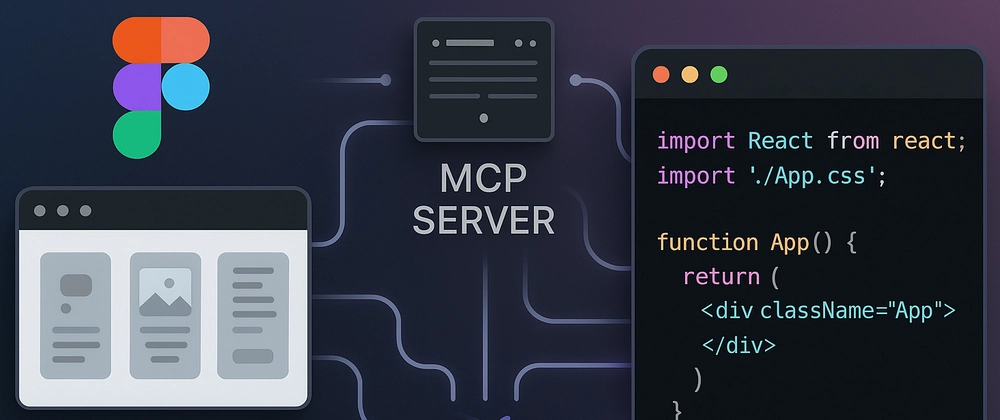
- Custom dashboards and integration layers — churn-analytics and NOC-reporting dashboards, and the lean integration layers — including MCP servers for AI access — that connect billing, provisioning, network management, CRM, and carrier APIs into one coherent system.
Where automation removes manual steps, these are the products and platforms that don’t exist until you build them — the portal your customers log in to, the reseller system your partners depend on, the provisioning engine built to your exact service catalogue.
What custom telco software costs — and how fast it ships
You don’t need a carrier-scale budget. Because we work in two-week sprints with a defined deliverable and an agreed price of around $10k per sprint, you start with one high-return piece, prove the value, then expand — never committing to a six-figure platform on day one.
| Scope | What’s included | Typical timeline |
|---|---|---|
| Focused automation | One workflow — e.g. enquiry triage on one channel, an automated provisioning flow, or alarm correlation for the NOC | 1–2 sprints (2–4 weeks) |
| Multi-workflow system | Support triage + provisioning + notifications wired together | 3–5 sprints (6–10 weeks) |
| Full custom platform | End-to-end build integrating OSS/BSS, CRM, and network management | Multiple sprints, scoped in stages |
The point of sprint-based delivery is that you see working software against your own systems every two weeks — and decide whether the next sprint is worth it based on real results, not a slide deck.
Telco software from MVNO through to carrier
Whether you’re a regional ISP, an MVNO, a wholesale provider, or a national carrier, we build software sized to your operation — the specific automation that removes your worst bottleneck, not a bloated all-in-one. Smaller operators start with one high-return piece (say, enquiry triage that ends the flood of balance-check contacts) and expand as it pays for itself; larger operators get software built for scale, data residency, and integration across many systems and regions. Because each two-week sprint has a defined price, the entry point is the same regardless of size — start where the return is highest, then grow. Compliance and onshore data handling are built in from the first sprint, not bolted on later.
How we’ve delivered this elsewhere
We’ll be straight with you: our deepest case studies aren’t in telco. But the work translates directly. We built product management and analytics tooling for IAG that scaled 5x — the same data-consolidation and dashboard work that underpins churn analytics and NOC reporting. We built AI survey technology that cut processing time by 20%, the kind of AI-triage-and-deflection pattern that powers tier-one support. And we helped a global sustainability NGO automate workflows for a 50% efficiency gain — the multi-system orchestration that provisioning and order workflows depend on. The domain is telco; the engineering is what we do every day.
Custom telco software, built for operators Australia-wide
We’re a Melbourne-based team working with telecommunications businesses nationally — ISPs, MVNOs, wholesale providers, and carriers in Sydney, Brisbane, Perth, and regional hubs. We handle telco software development for Sydney and Brisbane operators as readily as Melbourne ones: delivery is remote-first, with on-site workshops where they help, and every system runs on infrastructure you own and control.
Explore our approach to AI integration, custom software, and MCP servers, or see how we scope and ship in sprints.
What we do that most agencies don't
We integrate, not rip-and-replace
Your billing and provisioning platforms are business-critical. We build a lean layer over the OSS/BSS, CRM, and carrier APIs you already run — including MCP servers for AI access — instead of forcing a migration.
Right-sized, MVNO to carrier
A regional ISP and a national carrier need very different things. We build exactly what your operation needs today and scale it as your subscriber base grows — no bloat, no rip-and-replace.
Sprint-based, not open-ended
Defined deliverable and price per two-week sprint, around $10k each. Start with the highest-return piece, prove it, then expand — no six-figure commitment on day one.
Australian team, onshore data
You work with a Melbourne-based team in your timezone, and every system runs on infrastructure you own and control — which matters for telco compliance and data residency.
Built to hand over
We document everything and train your team. The system is yours to run — you're never held hostage to the agency that built it.
We start with ROI, not tech
Every engagement begins with the process that's costing you the most — queue time, provisioning delay, or churn. If AI or automation won't move the needle, we'll say so.
Real systems, real numbers

.png)
Frequently asked questions
How can AI reduce customer support costs for a telco?
AI agents resolve a large share of routine enquiries — billing questions, plan and address changes, SIM swaps, and basic connectivity troubleshooting — without a human touching them. When a case needs escalation, the AI hands the human agent full context and a suggested next action, so handle time drops even on complex tickets. The result is lower cost per contact and faster responses, without the offshore-scripting experience customers resent.
Can you automate service provisioning and order workflows?
Yes. We build order orchestration that validates the order, checks serviceability, triggers provisioning, manages number port-ins and port-outs, and confirms activation — coordinating your OSS/BSS, CRM, and network systems so the order moves without manual rekeying. The same workflows handle plan changes, moves, and disconnections, which is where a lot of manual telco effort and error actually lives.
How does AI help with network fault and incident management?
Telco networks generate enormous alarm volumes, and most of it is noise or duplicate symptoms of one root cause. We build correlation and anomaly detection that groups related alarms, suppresses the noise, and prioritises genuine incidents for the NOC — often flagging degradation before customers report it. That reduces alert fatigue and mean time to resolution, and gives support teams an early view of what's affecting which customers.
Can you build self-service and reseller portals for a telco?
Yes. We build customer self-service portals — view usage, change plans, pay bills, troubleshoot, order services — and reseller or partner platforms with provisioning, reporting, and white-label capability. These integrate with your billing, provisioning, and CRM so the data is real-time rather than a disconnected copy, which is what makes self-service actually deflect contacts instead of creating new ones.
What does telco automation software cost and how fast does it ship?
We work in two-week sprints at roughly $10k per sprint, each with a defined deliverable and price. A focused piece — enquiry triage on one channel, or an automated provisioning workflow — typically ships in one to two sprints. A multi-workflow system across support, provisioning, and billing is a few sprints, scoped in stages. You start with the highest-return process and expand as it proves out, rather than committing to a six-figure platform on day one.
Can you integrate with our existing OSS/BSS, billing, and CRM systems?
Yes. We build integration layers that connect billing platforms, provisioning and network management tools, CRM, and carrier APIs — including via MCP servers that let AI agents securely read and act on those systems in real time. We enhance the stack you already run rather than forcing a migration, which matters when your billing or provisioning platform is business-critical and can't be ripped out.
How do you predict and reduce customer churn?
We build models that score churn risk from usage patterns, billing history, support interactions, and contract timing, then wire those scores into retention workflows — proactive outreach, targeted offers, or a service fix — for the accounts most likely to leave. Because acquiring a telco subscriber costs far more than keeping one, catching at-risk customers before they port delivers a measurable return.
Do you build telco software for ISPs, MVNOs, and carriers across Australia?
Yes. We're Melbourne-based and work with ISPs, MVNOs, wholesale providers, and carriers across Australia — Sydney, Brisbane, Perth, and regional operators included. Delivery is remote-first with on-site workshops where they add value, and every system runs on infrastructure you own and control.
Related services
AI Integration
We build AI integrations, LLM agents, MCP servers, and workflow automation that replaces manual work and compounds over time.
Custom Software
We scope tight, build in sprints, and ship working software in weeks. No 200-page requirements docs or offshore handoffs.
MCP Servers
We build production MCP servers that give AI agents real tools — read and write data, trigger actions, operate autonomously.
Industries we work across
The same AI and custom software patterns transfer across sectors. See how we help teams in related industries.
Ready to get started?
Book a free 30-minute scoping call. We'll tell you honestly whether we can help.